The Walk · 14 of 14
STILL OPEN
What is it?
Ordinary experience. Not a verdict.
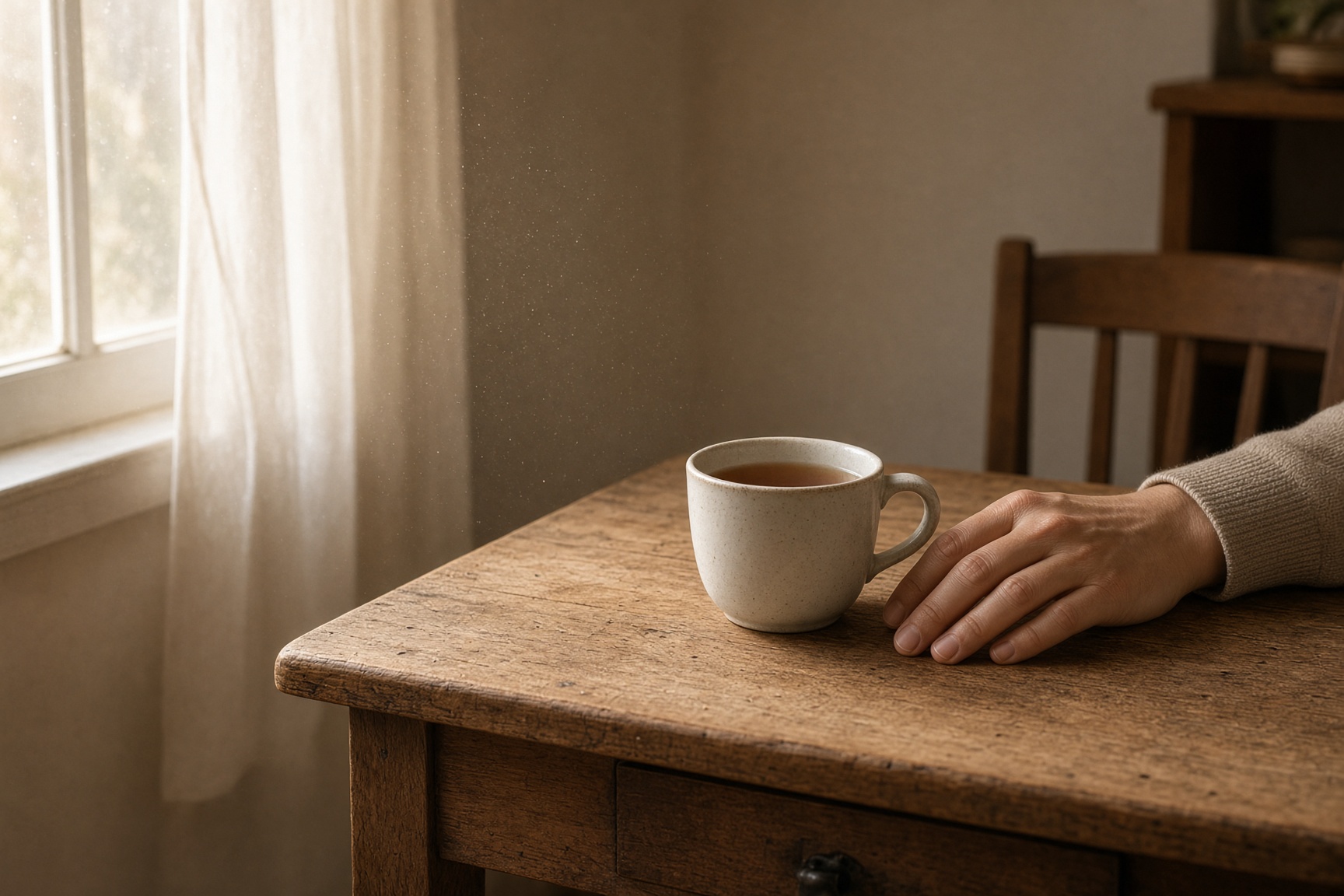
You are having an experience right now.
How do you know?
What is it?
The asking is the work.
Still open?
Hear
A room. Morning light, or afternoon light.
A cup. A sound outside.
Breathing. A hand.
You are having an experience right now. How do you know?
What is it? We have spent a long time learning how to ask.
Knowing with. Sensing with.
Heart-mind. Stream.
Signal. Person.
A watch before a mirror. A face through glass.
A public hope that consciousness should reach the stars, and a public admission that we do not yet know what it is. None of that closes the thing you are in.
The work is the asking. Still open.
Open question
Ordinary experience
The lamp of explanation can wait. Ordinary experience does not need a theory in order to be happening.
It may need a theory if we want to know what it is, who has it, what we owe, and how far it should reach. Those wants remain.
The last room is not a verdict. It is a return.
The measure is not whether we explained consciousness. The measure is whether the question became harder to ask carelessly, and more difficult to stop asking.
Open question
Doors, not a conclusion
Back to Cudworth's three dates. Back to Locke's two editions.
Back to other minds. Back to a recorded face and a looker who does not claim reciprocity.
The Meaning of Life keeps the question that consciousness is trying to ask. Field 42 keeps correspondences this walk will not use as proof.
A self without a sensed world is not yet a world. What Makes a World keeps that question.
You remain free.
Sources
James, William. The Principles of Psychology. New York: Henry Holt, 1890.
Consciousness as personal, constantly changing, and sensibly continuous. Names Heraclitus: we never descend twice into the same stream.
The stream metaphor is an account of how thought presents itself, not a claim to have invented subjective experience.